
The $20/Month AI Subscription Scam: Why 2026’s Real AI Revolution Has Nothing to Do With Chatbots
Primary Emotion: Practical Utility (Time & Money Savings)
The Truth That Will Save You Thousands of Dollars
Here’s something that will make you question every dollar you have spent on premium AI tools over the past year. The performance gap between free AI models and expensive frontier models is collapsing at a rate that shocked even the researchers who predicted it. That twenty-dollar monthly subscription you’re paying for the “smartest” AI chatbot? Within months, the free version will handle ninety percent of the same work.
But here’s the part that changes everything about how you should be thinking about AI business integration right now. The real revolution isn’t happening in the AI models themselves at all. It’s happening in how we build AI workflows and integrate them into our actual work. I have spent the last six months analyzing research from McKinsey, Stanford, and OpenAI while implementing these strategies in my own business, and what I discovered completely transformed my approach to productivity.
The companies making millions aren’t chasing the newest chatbot. They’re building repeatable systems where AI workflows handle the predictable parts while humans focus on strategy and validation. And the best part? You can start implementing these same strategies today, regardless of your technical skill level.
Trend #1: The Great AI Commoditization—When “Best” Stops Mattering
Remember when choosing a web browser felt like a life-altering decision? When people had passionate debates about Internet Explorer versus Chrome, as if their choice would define their entire digital existence?
That exact same pattern is playing out with AI models right now, and understanding this shift will save you both money and mental energy.
The Performance Convergence Nobody Expected
Here’s the data that fundamentally changed how I think about AI business integration. Open-source models like Llama and DeepSeek are now performing at levels that frontier models like GPT-4 were achieving just eighteen months ago. The gap is closing at approximately thirty percent per year, which means the difference between free and premium is evaporating faster than anyone in the industry predicted.
But here’s what really matters for your day-to-day work. For eighty percent of business use cases, you literally cannot tell the difference anymore between the free model and the premium version.
Think about that reality for a moment. The free model can now write professional emails, analyze complex spreadsheets, generate compelling marketing copy, debug your code, and summarize lengthy documents just as effectively as the version you’re paying twenty dollars per month to access.
Why This Changes Everything About Your AI Strategy
The real shift here isn’t technical in nature. It’s fundamentally economic. Modern AI chips use exponentially less energy per token compared to chips from just five years ago, which means running AI costs are dropping by roughly fifty percent every eighteen months. This creates a compound effect that most people aren’t fully grasping yet.
Translation for your business: The barrier to entry just evaporated completely.
What used to require a massive technology budget and dedicated IT staff is now accessible to a solo entrepreneur working from a coffee shop with just a laptop. The playing field didn’t just level out gradually. It got flattened by a steamroller, and the competitive dynamics are shifting faster than most established companies can adapt to.
The New Battleground: Integration Over Intelligence
Since the models themselves are becoming commoditized much like electricity or internet access, the competition is shifting dramatically to what I call the integration advantage. This is where the real value creation is happening right now in 2026.
It’s no longer about raw intelligence scores or benchmark performance. The winning factors are completely different:
Reach: How many users can access the AI seamlessly without friction or setup hassles?
Design: How intuitive is the interface for non-technical users who need to get work done quickly?
Trust: Do users believe in the system’s reliability and accuracy over time?
Context: How well does the AI understand your specific situation, your company’s processes, and your unique needs?
Here’s a real example from my own marketing team that illustrates this perfectly. We switched from using what was technically the “superior” AI model based on benchmark scores to using Gemini, not because it performed better on abstract tests, but because it integrated perfectly with our existing Google Workspace environment. We saved six hours per week just by eliminating the constant copy-paste dance between different tools and platforms. That time savings translated directly to finishing projects faster and taking on more client work without hiring additional staff.
Pro Tip: The two-percent performance difference you might get from a “smarter” model won’t matter nearly as much as the fifty-percent time savings you’ll gain from seamless AI business integration with your existing systems.
Your Action Step (Implement This Today)
Stop obsessing over benchmark scores and comparison charts. Instead, ask yourself these three strategic questions:
Which AI tool talks directly to the systems I already use every single day?
Which platform requires the least friction to access when I need it in the middle of my workflow?
Which service already has access to my data and understands the context of my work?
Choose that platform and commit to it fully. I promise the marginal performance differences won’t matter nearly as much as the massive time savings from AI workflows that flow naturally within your existing systems.
Trend #2: Forget Autonomous Agents—AI Workflows Are Where the Money Actually Is
Everyone on social media is talking excitedly about autonomous agents and fully automated systems. You know the dream: AI just handles everything automatically while you sip margaritas on a beach somewhere tropical, completely disconnected from your work.
Here’s the reality check that most people promoting this vision won’t tell you. Fewer than ten percent of organizations have successfully scaled fully autonomous agents in production environments. The technology exists, but the implementation challenges are far more complex than the hype suggests.
But here’s what’s actually working right now and generating real revenue…
The Quiet Revolution: Agent-Lite Workflows
While everyone’s chasing the fully autonomous dream and getting frustrated when it doesn’t work as advertised, smart companies are making millions with what I call agent-lite AI workflows. These are practical systems where AI handles all the predictable, repetitive parts while humans focus on validation, strategy, and the nuanced decisions that actually move the business forward.
The data supporting this approach is staggering. Roughly twenty percent of enterprise AI use already happens through workflow-specific tools like custom GPTs, automated processes, and integrated systems. This isn’t experimental anymore. It’s mainstream AI business integration that’s delivering measurable results.
The Three Trillion Dollar Opportunity
McKinsey’s latest research predicts that redesigning AI workflows with proper integration will unlock nearly three trillion dollars in economic value by 2030. That’s not a typo. Three trillion dollars of value creation from companies that figure out how to build these hybrid human-AI systems effectively.
Let me break down what that actually looks like with a detailed real-world example:
Before Implementing AI Workflows:
Your legal team spends eight hours manually reviewing each contract for compliance issues, checking against hundreds of regulations and company policies. Your analyst spends four additional hours preparing summary reports with findings and recommendations. Your manager spends two more hours validating those findings and making final decisions. Total time invested per contract: fourteen hours of expensive expert time.
After Implementing AI Workflows:
Your AI system scans the contract for one hundred fifty compliance markers in fifteen minutes, flagging every potential issue with precise references. The AI generates a comprehensive summary report with all flagged issues clearly highlighted in just ten minutes. Your lawyer validates the AI findings and addresses the complex edge cases that require human judgment in three hours. Total time invested: three and a half hours per contract.
The Result: Seventy-five percent time reduction, zero calculation errors, and your expensive legal experts spend their time on complex strategy and negotiation instead of manual document review.
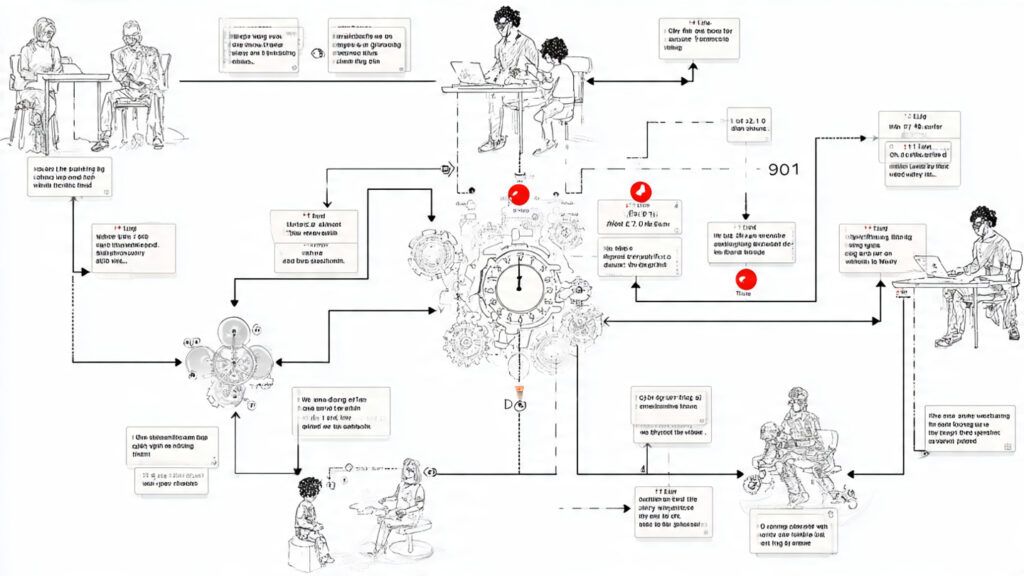
Why AI Workflows Beat Autonomous Agents Every Single Time
Here’s what I learned from studying companies actually implementing these systems successfully. Humans are exceptionally good at judgment, context, and handling novel situations. AI is exceptionally good at processing information, following rules, and maintaining consistency across thousands of repetitive tasks.
The magic happens when you stop trying to replace humans entirely with autonomous agents and instead create a carefully choreographed dance between AI speed and human wisdom. This hybrid approach delivers results that neither AI alone nor humans alone could achieve efficiently.
Learn AI Agents in DetailsExplore The n8n
The Implementation Framework You Can Copy Today
Step One: Identify a task you do weekly that has predictable, repeatable steps. Don’t try to automate your most complex work first. Start with something straightforward.
Step Two: Map out each micro-step in embarrassing detail. Write down everything, including the tiny steps you do automatically without thinking about them.
Step Three: Mark which steps are pure data processing versus steps requiring human judgment, creativity, or relationship management.
Step Four: Automate all the processing steps using AI workflows, but keep the judgment steps firmly in human hands where they belong.
Step Five: Create a template, custom GPT, or automated process for the automation components so you can repeat this workflow consistently.
Pro Tip: Don’t overthink the technology choices here. The framework matters far more than the specific tools you use.
Example Tasks Perfect for This Approach
Customer support ticket triage and initial response drafting (AI handles categorization and initial responses, humans handle complex issues)
Social media content scheduling and basic optimization (AI generates options and schedules posts, humans provide creative direction)
Data entry and basic analysis workflows (AI processes raw data and generates initial insights, humans interpret and decide)
Meeting notes and action item extraction (AI transcribes and organizes, humans validate important decisions)
Email drafting for common scenarios (AI generates drafts following templates, humans add personal touches)

Case Study: The Sixty Percent Time Savings
A mid-sized consulting firm I studied implemented this exact framework for their client reporting process. Previously, each comprehensive report took their analysts six to eight hours to compile from various data sources, analyze trends, and write up findings.
Their new AI workflow system:
The AI pulls data automatically from five different systems without human intervention. The AI generates initial analysis and identifies trends using statistical methods. The human analyst validates findings in just thirty minutes, checking for anomalies or misinterpretations. The AI drafts a narrative report following the company’s established template and style guide. The human analyst adds strategic insights and recommendations in forty-five minutes. The AI formats and finalizes the document according to client preferences.
New time per report: Two and a half hours
Time savings: Sixty percent reduction in time investment
Quality improvement: More consistent formatting and zero calculation errors
Analyst satisfaction: Significantly higher because they focus on insights instead of data entry
The key insight that made this work? They didn’t try to make AI do everything. They made it do the boring, repetitive parts perfectly while humans did what humans do best.
Your Action Step (Start This Week)
Pick ONE recurring task from your actual work. Just choose one to start with. Break it down into five to ten micro-steps with brutal honesty about what’s actually involved. Identify which three or four steps are pure data processing with no judgment required.
Tomorrow, create a simple prompt template or custom GPT that handles just those processing steps. Don’t try to automate everything at once and get overwhelmed. Start with the low-hanging fruit that will save you thirty minutes per week. Once that workflow is running smoothly, expand to the next task.
Trend #3: The Technical Divide Is Dead (And What That Means for Your Career)
This is the trend that keeps me up at night in the best possible way, because the implications are absolutely massive for everyone’s career trajectory.
Seventy-five percent of enterprise AI users report using AI to complete tasks they were previously unable to do.
Read that statistic again carefully and think about what it means. Three-quarters of workers right now are accomplishing things that were literally impossible for them before AI business integration became accessible.
The Great Equalization
Here’s a statistic that should terrify some people while exciting others dramatically. Coding-related messages from non-technical staff like sales managers, marketers, and HR professionals grew by thirty-six percent in just six months. These are people with zero formal programming training who are now building tools and systems.
Marketing managers are building sophisticated databases to track campaign performance. Sales representatives are creating automated dashboards that pull real-time data from multiple sources. HR coordinators are writing scripts to process hundreds of job applications efficiently. The technical moat that protected certain roles just evaporated overnight.
What This Means for Your Career Trajectory
If your entire value proposition rests on basic technical skills like building simple dashboards, cleaning messy data sets, or creating straightforward automation, your competitive advantage is shrinking faster than you probably realize. The barrier to entry for these tasks has dropped to nearly zero with modern AI workflows.
But here’s the massive opportunity that most people are missing. If you’re a domain expert who understands your clients deeply, understands industry nuances, and can solve complex problems creatively, the technical barrier to executing on your ideas just completely disappeared.
Let me share a personal example that illustrates this transformation perfectly.
I’m a marketing strategist by training, not a developer or data scientist. Six months ago, if I wanted to analyze customer sentiment across ten thousand support tickets to identify patterns and opportunities, I would need to submit a request to our overworked data team and wait three days. I would eventually get back a CSV file that I couldn’t make much sense of without help. I would schedule a meeting to explain what I actually wanted analyzed. I would wait another week for revised analysis. Maybe, just maybe, I would get useful insights after two full weeks of back-and-forth.
Now? I upload the CSV file to Claude, ask for sentiment analysis with my specific parameters, get detailed visualizations in ten minutes, and can iterate instantly based on what I discover. My bottleneck was never my strategic knowledge or my understanding of customer psychology. It was my inability to execute technically. That bottleneck is completely gone now.
The New Competitive Advantage
Here’s what actually matters for career success in 2026:
Domain expertise matters far more than technical skill. Deep understanding of your industry and clients trumps knowing how to code.
Creative problem-solving matters more than following established processes. AI can follow processes perfectly, but it can’t reimagine them.
Client relationships matter more than technical capabilities. Trust and understanding can’t be automated away.
Speed of learning matters more than existing knowledge. Your ability to adapt quickly beats what you know today.
The people who will win in this environment are those who combine deep industry understanding with the willingness to attempt tasks they previously considered impossible.
Pro Tip: The psychological barrier to attempting technical tasks is often ten times larger than the actual difficulty of completing those tasks with AI assistance.
The Challenge That Changed My Perspective
Three months ago, I challenged myself to complete one “impossible” technical task per week using only AI tools and my domain knowledge. Here’s what happened:
Week One: Built a web scraper to monitor competitor pricing across multiple sites. This used to require hiring a developer for two thousand dollars and waiting one week. I did it in three hours with AI assistance.
Week Two: Created an automated report that pulls data from three different platforms and generates insights. This used to require ongoing data analyst support. I built it in four hours.
Week Three: Built a functional chatbot for our website that answers frequently asked questions intelligently. This used to require a specialized agency and cost over five thousand dollars. I completed it in one afternoon.
Week Four: Developed a custom CRM integration that syncs data automatically between systems. This used to require an IT project lasting three months. I finished it in six hours across two days.
Total cost: Twenty dollars per month for my AI subscription
Total time invested: Approximately three to four hours per project
Previous cost to outsource these tasks: Over twenty thousand dollars
Previous timeline for completion: Six months minimum
I didn’t become a technical expert or learn to code properly. I became someone who could execute on technical needs instantly using AI workflows and good problem-solving.
Your Action Step (This Month’s Challenge)
Pick ONE technical task you have been putting off specifically because you “can’t do it” or would need to hire someone with specialized skills. Choose something concrete like cleaning a messy data set, building a simple automation, creating a custom report, analyzing complex data patterns, or writing a script to process files.
Spend two full hours attempting it with AI assistance alone. Use Claude, ChatGPT, Gemini, or whatever platform you prefer. Don’t give up after the first error message or roadblock. Iterate, ask for explanations, try different approaches.
You will be absolutely shocked at what you can accomplish. And once you successfully complete one impossible task, you will realize that the entire technical barrier was psychological rather than real.
Trend #4: Context Is the New Prompt Engineering
Remember when everyone was completely obsessed with prompt engineering? Learning the perfect magical way to phrase questions to AI so you would get better responses?
That entire era is ending rapidly. Welcome to the age where context matters infinitely more than clever prompts.
The Fact Gap Problem
AI models know an absolutely incredible amount of public information. They can tell you detailed facts about history, explain complex scientific concepts, help you with coding challenges, analyze literature, and discuss virtually any topic that has been written about extensively online.
But here’s what they know absolutely nothing about without your help:
Your specific brand guidelines and voice
Your company’s unique internal processes and workflows
Your recent emails and the decisions you have made
Your customers’ specific preferences and pain points
Your personal writing style and communication patterns
Your team’s current projects and priorities
This knowledge gap is what researchers are calling “the fact gap,” and it’s rapidly becoming the new competitive moat that separates effective AI business integration from mediocre results.
The Platform Lock-In Race
Here’s what’s really happening behind the scenes that most users don’t fully understand. Microsoft and Google are engaged in an intense arms race to capture your context and make their AI indispensable.
Microsoft desperately wants you to keep everything in Office 365. Google wants you to live entirely in Workspace. Apple wants all your files in iCloud. The underlying reason? Because the more of your data and context an ecosystem holds, the more useful and irreplaceable its AI becomes over time.
Think about the competitive dynamics here. If Google’s AI can seamlessly reference your last five hundred emails, all your calendar appointments, your shared documents, your meeting transcripts, and your project files, then it can give you incredibly specific answers like: “Based on your conversation with Sarah last Tuesday about the new product launch and the Q3 goals document that your team created, here’s a draft proposal that aligns perfectly with both.”
No other AI platform can deliver that level of contextual relevance without access to the same information.
The File Organization Crisis
Here’s the uncomfortable truth that most people don’t want to face. Most people’s information is an absolute disaster spread across multiple platforms.
Files scattered randomly across email attachments that you can never find again, Google Drive folders with no clear organization, Dropbox accounts with duplicate files, desktop folders that have never been cleaned up, endless Slack conversations with important decisions buried somewhere, various cloud platforms from different projects, and old computers with outdated versions of everything.
If AI cannot easily find your information, it cannot help you effectively. It’s exactly like hiring a genius assistant but locking them in a closet without access to any of your files or context.
Pro Tip: The smartest AI in the world becomes useless if it cannot access the context it needs to help you.
The Case for Consolidation
I interviewed a creative agency that spent one focused weekend consolidating their files and information. They moved everything possible to a single Google Workspace with clear naming conventions and logical folder structures.
The result? Their AI workflows became three times more useful literally overnight, not because the AI suddenly got smarter, but because it could finally find the context it needed to provide relevant, specific assistance instead of generic responses.
Before consolidation: “AI, draft a proposal for Client X.” Generic proposal that required ninety percent rewriting and hours of work
After consolidation: “AI, draft a proposal for Client X using our standard proposal template, incorporating their preferences from the kick-off meeting notes, and aligning with the pricing structure in our Q4 rate sheet.” Specific proposal that needed only twenty percent polishing and minor adjustments
The difference in usefulness was absolutely night and day.
The Context Framework You Can Copy
Level One: Basic Context (Implement this immediately)
Consolidate files into one primary platform that you commit to using. Use clear, descriptive file names that make sense six months later. Create a simple folder structure that matches how you actually think about your work. Delete outdated versions and duplicates ruthlessly.
Level Two: Structured Context (Complete this within thirty days)
Maintain updated templates for common tasks in accessible locations. Document your processes in easily searchable files. Keep style guides and brand documents where AI can reference them. Use consistent naming conventions across all your work.
Level Three: Dynamic Context (Advanced implementation)
Integrate calendar with your document management system. Connect email with project management tools. Link communication tools with file storage platforms. Create automated context capture for important decisions and conversations.
Your Action Step (This Weekend Project)
The Ninety-Minute Context Audit:
List every single platform where your work files currently live (ten minutes of honest assessment)
Identify your “source of truth” platform where you will consolidate everything (five minutes of strategic decision-making)
Move or link your twenty most-used files to that platform (forty-five minutes of focused work)
Rename your ten most important files with clear, descriptive names (fifteen minutes)
Create three to five main folders with logical organization (fifteen minutes)
Don’t try to perfect everything or reorganize your entire digital life. Start with just the files you use weekly. Once those are properly organized, your AI workflows can start delivering exponentially more value.
Trend #5: Ads Are Coming to Your Chatbot (And Why That’s Actually Good News)
I know exactly what you’re thinking right now. “Great, another useful tool getting ruined by advertising and commercialization.”
But hear me out carefully, because this trend is far more important and far less problematic than it initially sounds.
The Wealth Gap Problem
Without advertising revenue or alternative monetization models, the best AI models would remain locked behind expensive subscriptions forever. That reality creates a world where only wealthy individuals and large corporations have access to cutting-edge AI tools and capabilities.
The subscription-only model inherently creates an AI class system that reinforces existing inequalities.
Free users get the mediocre or outdated version. Premium users get the good, current stuff. The gap between those who can comfortably afford twenty to two hundred dollars per month and those who cannot becomes a massive competitive chasm that widens over time.
Advertising revenue changes this entire equation fundamentally.
How Chatbot Ads Will Actually Work
Here’s where it gets genuinely interesting. AI advertising cannot and will not look like traditional search engine ads. The platform dynamics make that approach completely unworkable.
Think about the trust dynamics carefully. If you ask an AI “What’s the best project management software for a small team?” and it recommends Asana primarily because Asana paid for preferred placement, you would immediately lose all trust in that AI platform. Game over. You would never use it again for important decisions.
The approaches researchers and companies are developing for 2026 include:
Display banners that are completely separate from the AI’s actual answers, similar to website ads that don’t influence editorial content
Sponsored context where companies can ensure accurate, up-to-date information about their products appears when organically relevant to the conversation
Commercial partnerships where AI platforms share revenue with content creators whose work trains the models, creating a sustainable ecosystem
The crucial requirement: The integrity of answers must remain completely untouched, or users will abandon the platform immediately. Trust is the entire foundation of AI business integration.
Why This Benefits You
When implemented correctly and ethically, ad-supported AI platforms mean:
Free access to frontier-level models that would otherwise cost money
More competition between platforms driving better features and innovation
Sustainable ecosystem where AI companies can profit without restrictive paywalls
Broader accessibility that closes the digital divide instead of widening it
The alternative scenario? A world where only those who can afford premium subscriptions get AI advantages in their careers, education, and businesses. That world reinforces existing inequalities and limits innovation to those with resources.
I’ll choose the version with clearly marked ads over the version that restricts access any day.
Pro Tip: Ad-supported models democratize access to technology in ways that subscription models never can. The key is maintaining clear boundaries between advertising and content integrity.
Your Action Step
When ad-supported AI platforms launch fully, judge them by this clear standard: Can you easily distinguish between the AI’s genuine, unbiased answer and the advertising content? If yes, the implementation is fine and you should support it. If no, if the advertising compromises answer integrity, switch platforms immediately.
Vote with your usage patterns. The platforms that maintain trust and transparency will win long-term. Those that compromise answer integrity to maximize advertising revenue will lose users and ultimately fail.
Explore the Google’s AITrend #6: AI Is Leaving the Screen (And Entering Physical Reality)
This is the trend that doesn’t directly affect your work today, but it will fundamentally reshape entire industries and labor markets within five to ten years. Understanding it now gives you time to prepare and adapt.
AI is moving decisively from software chatbots on screens into physical robots that can navigate real-world environments and manipulate objects.
The Autonomous Maturity Curve
We’re already seeing compelling early examples of this transition in production:
Waymo has logged over one hundred million autonomous driving miles in real-world conditions
Amazon’s warehouse robots have dramatically cut shipping times and reduced errors
Autonomous tractors are harvesting crops with minimal human oversight required
Delivery robots are navigating sidewalks in major cities handling routine deliveries
These aren’t experimental prototypes anymore. They’re deployed in production environments, generating real revenue, and improving continuously with every software update.
Assets as Software Endpoints
Here’s the paradigm shift that changes everything about physical assets. A tractor used to be a depreciating asset that you purchased for one hundred thousand dollars. It would break down over time, eventually requiring replacement.
Now? A modern autonomous tractor is a platform that actually improves over time through continuous software updates. It gets smarter, more efficient, and more capable with each update, just like your smartphone becomes more useful over time.
Physical assets are increasingly becoming software products that appreciate in capability even as the hardware ages.
The Long-Horizon Disruption
Right now, virtually everyone’s focused on AI disrupting white-collar knowledge work. And yes, that disruption is happening incredibly fast, as we’ve discussed throughout this article.
But the bigger, slower wave that’s building is coming for blue-collar physical work. Not next year necessarily, but definitely within the next decade.
Jobs heavily involving driving and delivery, warehouse operations and logistics, manufacturing assembly processes, basic construction tasks, agricultural labor, and cleaning and maintenance will face the same pressure that knowledge workers are experiencing right now.
Why This Matters to You Today
Even if you don’t work in these physical labor fields, understanding this trend matters tremendously because:
Investment implications: Companies building physical AI infrastructure are creating massive long-term value
Career planning: If you’re advising young people about careers, point them toward uniquely human skills
Business strategy: Physical AI will fundamentally reshape supply chains and cost structures
Societal preparation: We need to start conversations about workforce adaptation now, not when it becomes a crisis
The Skills That Stay Human
What cannot be easily automated in physical reality even with advanced robots?
Creative problem-solving in completely novel, unexpected situations
Emotional intelligence and genuine human connection
Strategic thinking about complex, ambiguous systems
Ethical judgment in morally ambiguous situations
Rapid adaptation to constantly changing contexts and requirements
If your job, whether physical or digital, relies heavily on these uniquely human skills, you’re in a strong position. If it’s primarily procedural execution following established processes, start building complementary capabilities now.
Your Action Step (For Future Planning)
The Ten-Year Career Audit:
Ask yourself these four honest questions:
Could a robot do my current job if it had perfect physical dexterity and unlimited processing power?
What percentage of my work involves human-to-human interaction that genuinely creates value?
Am I actively building skills that become more valuable as AI handles execution?
If my industry gets disrupted significantly, what adjacent fields would value my core expertise?
Don’t panic about the answers. Just be completely honest with yourself. If your answers concern you, start building complementary skills now while you have time to adapt gradually.
The Integration Framework: Your Thirty-Day Action Plan
You’ve absorbed the six major trends. Now here’s exactly how to implement them in your actual work systematically.
Week One: The Foundation
Days One and Two: Complete your context audit and consolidation using the framework from Trend Four. This is foundational work that makes everything else more effective.
Days Three and Four: Choose your primary AI platform based on integration with your existing systems, not abstract performance benchmarks.
Days Five Through Seven: Identify one specific recurring workflow to redesign using the principles from Trend Two.
Week Two: The Quick Wins
Days Eight Through Ten: Map out your chosen workflow in meticulous detail, identifying every single micro-step.
Days Eleven Through Thirteen: Attempt one “impossible” technical task with AI assistance using the approach from Trend Three.
Day Fourteen: Review your results honestly and iterate based on what worked and what didn’t.
Week Three: The Build
Days Fifteen Through Seventeen: Create your first AI workflow automation based on everything you’ve learned.
Days Eighteen Through Twenty: Test and refine the workflow until it runs smoothly and consistently.
Day Twenty-One: Document the process clearly so others can learn from your work.
Week Four: The Scale
Days Twenty-Two Through Twenty-Five: Train team members on your new workflow so the benefits multiply across your organization.
Days Twenty-Six Through Twenty-Eight: Identify the next workflow to automate and begin the process again.
Days Twenty-Nine and Thirty: Reflect honestly on your progress and plan your strategy for the next thirty days.
The Metrics That Actually Matter
Track these specific numbers to measure real progress:
Hours saved per week on recurring tasks (your time is valuable)
Tasks completed that you previously couldn’t do (capability expansion)
Turnaround time from request to completion (speed improvements)
Quality improvements measured by fewer errors and better consistency
New capabilities unlocked through effective AI business integration
Don’t track vanity metrics like “number of AI prompts used” or “hours spent with AI.” Track actual business value created and time reclaimed for higher-value work.
The Uncomfortable Truth: There Are No Permanent Experts
Here’s what keeps me genuinely humble about all of this. In the current “jagged frontier” of AI capabilities, nobody remains an expert for very long.
The person who masters ChatGPT perfectly today will be outdated in six months when new capabilities emerge. The workflow that seems perfect right now will be obsolete by 2027 when new tools emerge. The technical skill you worked hard to learn yesterday will be automated tomorrow.
Success in 2026 isn’t about knowing everything or becoming the ultimate expert. It’s about learning faster than everyone else and adapting quickly.
The Continuous Learning Mindset
The winners in this new environment are those who experiment constantly without fear of failure, share learnings generously instead of hoarding knowledge, adapt quickly when circumstances change, stay genuinely curious about new capabilities, and focus relentlessly on outcomes over specific tools.
If you’re reading this article right now, you’re already ahead of most people. You’re actively seeking to understand instead of resisting change. You’re learning proactively instead of complaining about how things used to be.
That mindset and approach is worth far more than any specific AI skill or technical knowledge.
Frequently Asked Questions
Q1: Which AI tool should I actually use in 2026?
Short answer: Use the tool that integrates seamlessly with what you already use daily.
If you live primarily in Google Workspace, use Gemini because the AI business integration is seamless. If you’re Microsoft-focused, use Copilot for the same reason. If you need maximum flexibility and aren’t locked into an ecosystem, use Claude or ChatGPT.
Stop chasing the objectively “best” model based on benchmark scores. Focus on the platform with the least friction in your actual workflow. You’ll save dramatically more time through seamless integration than you’ll ever gain from a slightly smarter algorithm.
Q2: Will AI actually take my job?
Honest answer: AI won’t take your job directly, but someone using AI better than you might.
The threat isn’t the technology itself. The threat is the person who learns to leverage AI workflows to do your job faster, better, and cheaper than you can. Your best defense is becoming that person first.
Focus on building effective AI workflows using Trend Two and breaking through technical barriers using Trend Three. The goal isn’t to compete against AI. It’s to collaborate with AI more effectively than your competition does.
Q3: I’m not technical at all. Is it too late for me?
Empowering answer: This is literally the best time in human history to be non-technical.
Remember Trend Three: Seventy-five percent of workers are using AI to complete tasks they previously couldn’t do. The technical divide is ending rapidly. Domain expertise and industry knowledge matter far more than coding skills now.
Start with the “impossible task” challenge from Trend Three. Pick something simple you’ve always wanted to do technically, and spend two focused hours attempting it with AI. You’ll genuinely surprise yourself with what you can accomplish.
Q4: Should I pay for premium AI subscriptions?
Practical answer: Yes right now, but probably not forever.
Currently, premium subscriptions at twenty dollars per month are absolutely worth it for the increased speed, better integration features, and priority access during peak times. The productivity gains pay for themselves quickly if you use the tools effectively.
But by late 2026, as Trend One predicts, free models will close the gap significantly through AI commoditization. My advice: Pay now while the advantage is clear and tangible, but don’t lock yourself into thinking you’ll need premium forever.
Q5: How do I convince my boss or team to adopt AI workflows?
Strategic answer: Don’t ask for permission or try to convince anyone. Show results instead.
Start with one workflow that affects only your own work. Redesign it using AI workflows. Document the time savings and quality improvements meticulously. Then casually mention your results in a team meeting without making it a big presentation.
When people see real productivity gains instead of theoretical benefits, adoption happens naturally and organically. Be the proof of concept, not the evangelist asking for buy-in.
Q6: What skills should I focus on developing right now?
Future-proof answer: Focus on skills that complement AI rather than compete with it.
Develop strategic thinking because AI can execute but you decide what to execute. Build creative problem-solving skills because AI follows patterns but you break them and reimagine them. Strengthen emotional intelligence because AI cannot read rooms or build genuine relationships. Deepen domain expertise because deep industry knowledge cannot be easily replicated. Practice rapid learning because the ability to adapt faster than your competition is the ultimate advantage.
Technical skills remain valuable, but they’re becoming increasingly commoditized. Uniquely human skills are appreciating in value.
Q7: How do I organize my files for better AI context?
Start with consolidation. Choose one platform as your source of truth. Use descriptive file names that make sense months later. Create a simple folder structure that matches how you think. Delete duplicates and outdated versions ruthlessly.
The goal isn’t perfection. The goal is making your most important files easily findable by both you and your AI tools.
Q8: What’s the biggest mistake people make with AI workflows?
Trying to automate everything at once instead of starting small. Pick one simple workflow. Make it work well. Then expand gradually.
The second biggest mistake is focusing on tools instead of outcomes. The specific AI platform matters far less than the value you’re creating with it.
Q9: How long will it take to see results from implementing these trends?
You can see your first time savings within one week if you follow the action steps. Significant transformation typically takes thirty to sixty days of consistent implementation.
The key is starting immediately with small wins rather than planning endlessly for the perfect comprehensive approach.
Q10: What happens to jobs that AI can’t replace?
Jobs requiring genuine creativity, emotional intelligence, strategic thinking, and rapid adaptation to novel situations will become more valuable, not less. Focus on developing these capabilities alongside your technical skills.
Q11: How do I handle AI errors and mistakes?
Build validation steps into your AI workflows. Never trust AI output blindly, especially for important decisions. Use AI to handle the processing, but keep human judgment for validation and final decisions.
Q12: What if my industry is slow to adopt AI?
That’s your competitive advantage. While others wait, you can build expertise and workflows that put you years ahead when adoption accelerates.
Q13: How do I keep up with rapid AI changes?
Stop trying to master everything. Focus on using AI to solve your actual problems. The specific tools will change, but the principles of good AI business integration remain consistent.
Q14: Should I learn prompt engineering?
Basic prompting skills help, but context and integration matter far more than perfect prompts. Spend your time organizing your information and building workflows rather than optimizing prompts.
Q15: What’s the ROI on time invested in learning AI?
Most people see ten to twenty times return on time invested within the first month. An hour spent learning AI workflows typically saves ten to twenty hours of work.
Your Next Move: The One Thing to Do Right Now
If you only do ONE thing after reading this entire article, do this:
Identify one task you do weekly that takes two or more hours of your time. Follow this simple process:
Map it clearly: Write down every single step involved (ten minutes)
Identify the boring parts: Mark which steps are pure data processing with no judgment required (five minutes)
Create one prompt: Build a prompt template or custom GPT that handles those processing steps (twenty minutes)
Test it once: Run your AI-assisted version and see what happens (thirty minutes)
Refine it: Improve based on what didn’t work the first time (fifteen minutes)
Total time investment: Eighty minutes maximum
Potential weekly savings: Two or more hours, forever
That’s over one hundred fifty percent return on investment in the first week alone. By week ten, you’ve saved twenty hours. By year-end, you’ve reclaimed an entire work week.
Now multiply that by ten different workflows, and you’ve just transformed your entire productivity completely.
The Bottom Line: Integration Beats Intelligence
The future of AI isn’t about finding the smartest chatbot or the most advanced model. It’s about building practical systems where AI workflows handle the boring, repetitive parts and you focus on the parts that genuinely matter.
The six trends all point to the same fundamental truth: The winners in 2026 won’t be those with access to the best AI tools. They’ll be those who integrated AI business integration most effectively into their actual work.
Stop chasing the newest model release. Stop obsessing over benchmark scores. Stop waiting for the mythical “perfect” AI solution that does everything.
Start building workflows systematically. Start organizing your context properly. Start attempting impossible tasks today.
The AI revolution isn’t coming sometime in the future. It’s already here right now. The only question is whether you’re riding the wave of change or watching from the shore as others pass you by.
Take action today. Your future self will thank you.
Written by Rizwan


Useful content for anyone interested in N8n ฟรี and no
code tools for task automation data synchronization and integration platform development
Thanks a Lot. Your words motivate me to write more