
This is a Article about technology and freedom.
The $200,000 Ultimatum
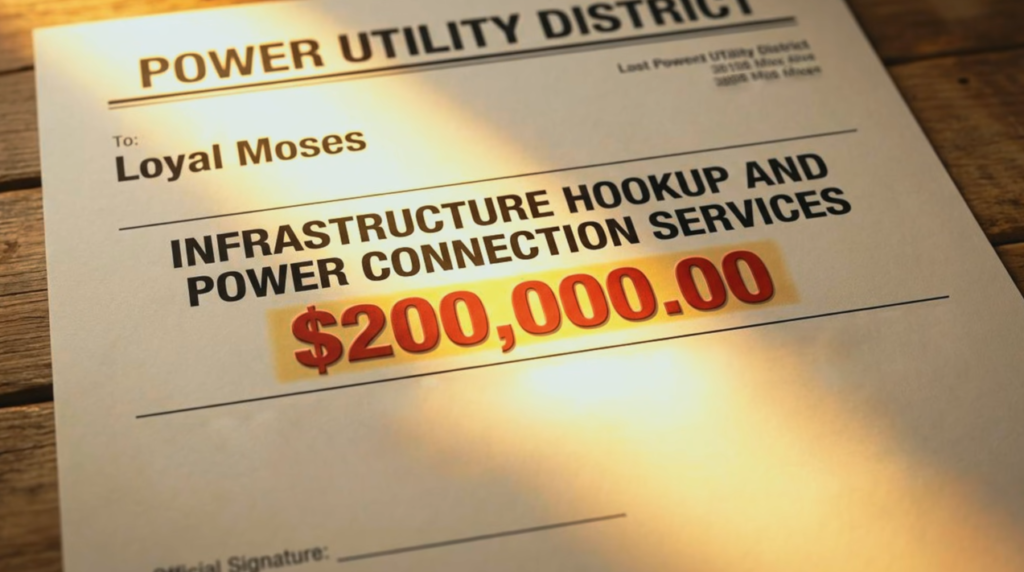
The power company wanted $200,000 just for the right to send me a monthly bill. They wanted me to subscribe to their system forever. So I built my own utility network instead. More than a decade ago I bought raw land on a mountain. The plan was simple build a house call the power company and tie into the grid like everyone else and just live a normal life. I built the roads into the ranch myself. I built the house with my own hands. We ran small portable generators just to have power tools during construction. It was temporary. Grid power was supposed to be the next step. So I called the local utility district and I asked what it would cost to run power to the property. What I didn’t know was that this phone call would permanently change the trajectory of my life. On that first call the person on the other end was rude condescending and at one point he said something I’ll never forget. He said “You people from the Seattle side think that you can just come over here and buy up all of our land and get free power?”.
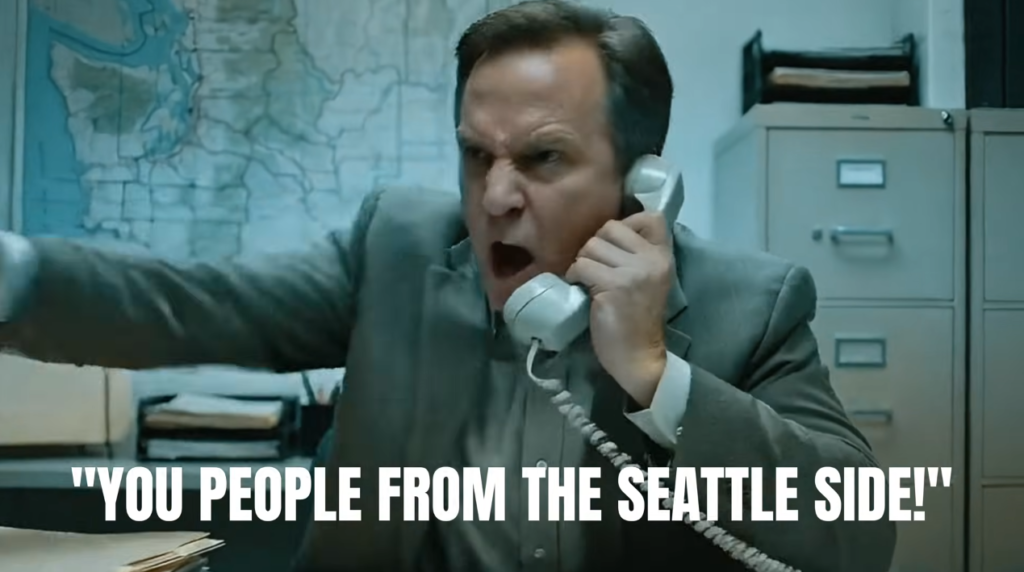
You people are you kidding me i was born and raised in that valley and I wasn’t some outsider parachuting in. I was a potential customer asking what it would cost to connect to infrastructure that used to be run to everyone for free. Now he was quick to apologize and we ended up scheduling someone to come up to the ranch to give me a quote. But that’s when things escalated.
Secret Weapon of GoogleGemini
The Arrogance of the Grid
I’m standing on a mountaintop. There are no houses in sight no structures anywhere around us. It’s just sage brush dirt and wide open sky. And a clean SUV drives up through the dust. Some guy steps out with sunglasses on. He thinks he’s smooth. He’s delivering a sales pitch that he’s given a hundred times before. He tells me that the cost to run power from the nearest road to my build site would start at $100,000. And that’s if everything goes perfectly. If they have to blast because of rock if they have to trench if any part needs to go into ground they’re talking over $200,000 to get power to my own house.
Now I actually laughed. I thought he was kidding. I told him “For that kind of money I could build an entire off-grid solar system and never pay you again.”. Arrogantly this guy looked at me and said “Do me a favor Look around You see any solar panels on this mountain?”. I humored him. I looked around. And of course I didn’t see anything cuz nobody else is even close to us. He looks at me and says “That’s right because solar panels don’t work.”. He then told me that that would be a waste of my money that I’d come crawling back to the utility district in a couple of years and I’d end up paying more than this quote. Now in that moment something flipped and I decided that I would never give the utility district a single dollar.
Building a Zero-Dollar Utility District
Now I had never built a power system in my life but the moment he left I opened up my laptop in the truck and I started researching. And within a week I was ordering equipment. And over the next year I built a 100% off-grid system. It has a massive groundmounted solar array. I added wind turbines. I installed a 6,000 lb battery bank. It’s massive. All of my inverters are network controlled. And I installed a 30,000 W John Deere turbo diesel generator as a backup. Now we didn’t just replace what the utility offered we exceeded it. Now in total I spent about $100,000 on the entire system less than their worst case quote just to run lines. And for more than a decade now we have paid the power utility district exactly $0.
Professional Claude SkillsA Hacker’s Approach to Infrastructure
25 plus years ago I was a professional hacker. And for 20 years after that I owned an information security company. Technology is in my blood. But even after retiring to the ranch to separate myself from the stress of that life I found that I couldn’t really escape it. I just love technology too much. Now when I designed that power system all of my experience is in my brain. And I wanted something that was modular something that could be easily expanded. I wanted something that wasn’t locked into a specific brand. And I wanted something that I could bypass. If for whatever reason I needed to power the entire ranch from a generator or from the PTO of a tractor I wanted that capability. As of right now everything that you see is powered from that system. And the entire ranch can be powered by wind. It can be powered by solar. It can be powered by diesel. And it can even be powered by gasoline or propane. Now that’s true ownership and ultimate freedom.
The Weight of Independence
Think about it this way. The grid doesn’t just want your money. It wants your dependence. My off-grid power system is sort of my declaration of independence from a world that wants to just wrench you everything. Here’s the part that most people don’t understand until they experience it. When there’s a grid outage you can see it from the mountain in the distance. Little flickers of light disappear through the trees. Neighborhoods go dark. Entire sections of the mountain just shut off. But our ranch stays lit because I am the power utility. I run the power. I run the water. I maintain the system.
If something breaks it’s my problem. There’s no 1-800 number. There’s no waiting on hold. There’s no blaming the grid. There’s just responsibility and freedom. Now let’s be honest. Being your own utility is not always as romantic as some people believe. If there’s a generator issue that’s on me. If there’s a software glitch it’s on me. If there’s an electrical failure in the middle of winter it’s on me. Independence is heavy but dependence is heavier because dependence means someone else decides your cost. Someone else decides your access. Someone else decides whether your power is worth delivering. The utility district used to run power to everyone. That was the model. Infrastructure was built to expand. Then it changed. Suddenly new builders were expected to fund the poles the insulators the conduit the wire the labor the crews even the crews lunch. It wasn’t public service anymore. It was leverage.
Freedom is Engineered
This story isn’t about solar panels. It’s about a mindset that most people don’t wake up one day planning to disconnect from the grid. They assume that the systems around them are always just going to work always be accessible and always be affordable until they aren’t. The moment someone tells you you can’t you have to you’ll come back. It doesn’t work. That’s the moment you decide who you are. More than a decade later this ranch is still 100% off-grid. Not a single connection to the outside world. No monthly electrical bill no rate hikes no policy shifts affecting whether my lights turn on. And the lessons of this mountain apply far beyond power lines. If you don’t own your infrastructure then you’re renting your stability. If you don’t control your systems you’re negotiating for your access. Tech independence isn’t about paranoia. It’s about optionality. It’s about building systems that don’t require permission.
I didn’t set out to become an off-grid ranch I set out to build a house. But when someone tried to rent me my independence for $200,000 and then told me solar wasn’t going to work they accidentally gave me a gift. They gave me a reason. Now when the grid flickers in the distance and our ranch stays lit it’s more than electricity. It’s proof. Proof that you don’t have to accept the default. Proof that you can build your own infrastructure. Proof that freedom isn’t really theoretical. It’s engineered. And once you experience that level of independence you don’t go back. We all need the same song.


U are awesome
Thank you so much for the kind words. I’m glad you found the article helpful and appreciate you taking the time to comment.